
Strategy & Craft
Splitting an ad budget: the 70-20-10 rule
Seventy per cent on what works, twenty on scaling, ten on experiments. The rule is old, simple, and violated in almost every account.
2 min readMay 9, 2026
Strategy & Craft
One page, twelve columns, six rows. Built in an afternoon, it prevents the two most expensive habits in advertising.

Most advertising happens reactively: something is booked because a representative called, or because a competitor did something, or because a quiet month caused alarm. A plan is the defence against all three.
Twelve columns for the months. Six rows:
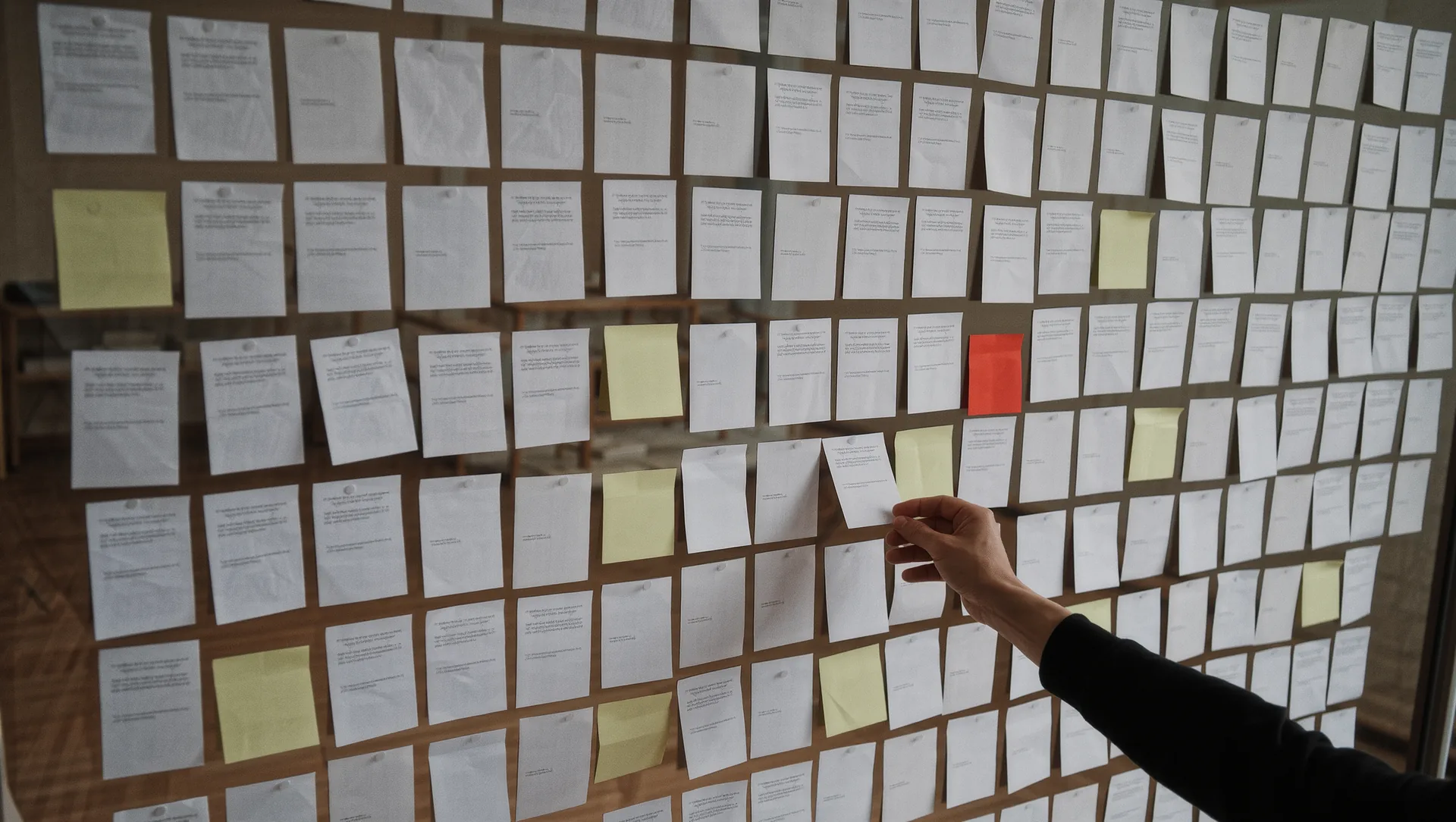
That page goes on a wall. A plan in a shared drive is a document; a plan on a wall is a plan.
The most common planning error is advertising during the season. By the time the season starts, the decision has been made.
| Purchase | Decision made | Advertise from |
|---|---|---|
| Heating replacement | Aug to Oct | June |
| Garden work | Feb to Apr | January |
| Christmas retail | Oct to Nov | September |
| Holiday booking | Jan to Feb | late December |
| Business software | budget season | two months before |
The lead time is the whole point. A roofing firm advertising in November is competing with everyone else for customers who chose in September.
Campaigns fail on production, not on media. Photography needs booking, copy needs approval, print needs lead time.
Work backwards from the launch date: media booking 4 weeks before, artwork final 3 weeks before, copy approved 5 weeks before, photography 8 weeks before. Then put those dates in the calendar as commitments.
Plan 80 per cent of the budget. The remaining 20 covers what you cannot foresee: a competitor's move, an unexpected opportunity, a channel that suddenly works.
A fully allocated plan has no capacity to respond, and the response is often the most valuable spend of the year.
Four dates in the calendar, 90 minutes each. Three questions per campaign: what did it cost, what did it produce, and does the next quarter change.
Move the budget where the evidence points. A plan that cannot be changed at the quarter is a budget, not a plan.
Channel, message, budget and dates per month. Creative detail belongs in the individual brief.
Then plan the recurring 70 per cent and hold the rest as a reserve you allocate quarterly.
More from Strategy & Craft
Strategy & Craft
Seventy per cent on what works, twenty on scaling, ten on experiments. The rule is old, simple, and violated in almost every account.
Strategy & Craft
Percentage-of-revenue rules are widely quoted and mostly wrong. The answer comes from your own numbers in four steps.
Strategy & Craft
A bad brief produces bad work at full price, and the client pays twice. Eight questions, two pages, three hours of your time.