Print & Out-of-Home
Print advertising is not dead, just pricier
Circulation has fallen and cost per contact has risen. What has also risen is the attention a printed page receives, and that changes the sum.
2 min readNov 2, 2025
Print & Out-of-Home
Eight seconds to decide whether to keep it. Four elements determine what happens in those eight seconds, and the letter itself is not one of them.
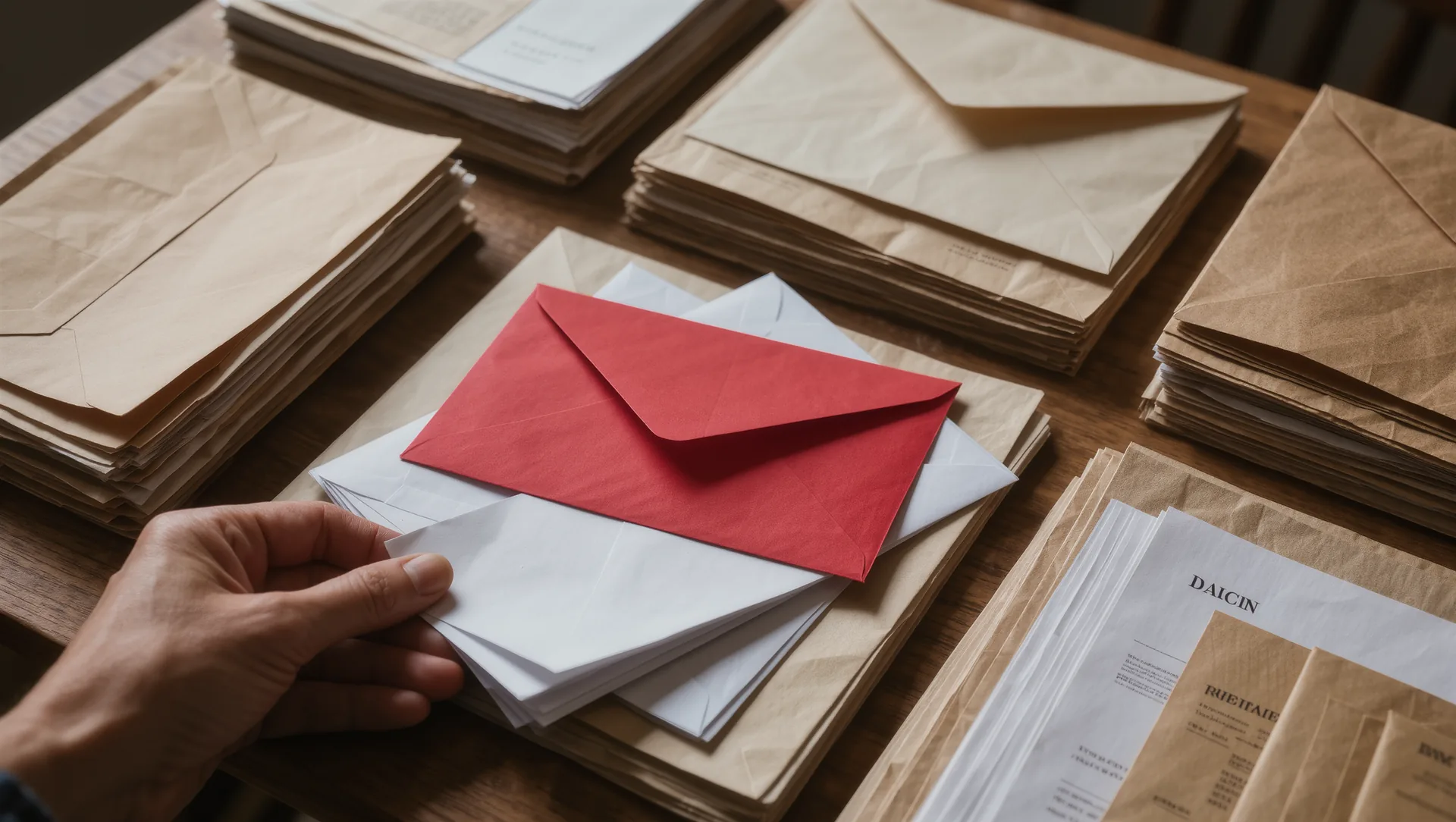
A letter arrives, is held for a few seconds over a bin, and is either kept or discarded. Everything depends on that moment.
| Envelope | Open rate |
|---|---|
| Handwritten address, stamp | highest |
| Printed address, stamp | high |
| Window envelope, franked | medium |
| Obvious bulk mail with a message printed on it | lowest |
A letter that announces itself as advertising on the outside is discarded unopened by most recipients. A plain envelope with a real stamp is opened by nearly all of them.
The cost difference between a franked bulk envelope and a stamped one is small relative to the difference in open rate.
The most common error is enclosing a brochure and calling it direct mail. Brochures are read as advertising and discarded accordingly.
A letter that looks like correspondence, so a single sheet, a real signature, a normal typeface, no photographs, gets read. It is counter-intuitive and consistently demonstrated.
The evidence favours longer letters for considered purchases. A two-page letter frequently outperforms a one-page letter, because the reader who is interested wants the detail and the reader who is not stopped after the first paragraph anyway.
The condition is that every paragraph does work. Length as padding fails.
Whatever you ask for must be physically easy. A telephone number in large type, a pre-paid reply card, a short web address, or a QR code that goes to a dedicated page rather than the homepage.
Reply cards still perform, particularly with older audiences, and the physical act of returning something correlates with genuine intent.
A letter followed by a telephone call a week later, where lawful for the recipient type, produces several times the response of the letter alone.
For business recipients this is generally permissible. For consumers, unsolicited calls require prior consent in most jurisdictions.
Mail in two batches. Change one thing: the envelope, the offer, the opening line. Compare response. Two rounds of that produce a letter that works considerably better than the first draft.
As long as the argument requires. Long letters outperform short ones for considered purchases, provided every paragraph earns its place.
Yes, with the correct name and something genuinely specific. A mail-merge first name in a generic letter is worse than none.
More from Print & Out-of-Home
Print & Out-of-Home
Circulation has fallen and cost per contact has risen. What has also risen is the attention a printed page receives, and that changes the sum.
Print & Out-of-Home
The rate card is a starting point, the position matters more than the size, and the readership figure is not the number you should plan with.
Print & Out-of-Home
Small circulations, high cost per thousand, and almost no waste. For business-to-business advertisers this is frequently the most efficient channel available.