Print & Out-of-Home
Print advertising is not dead, just pricier
Circulation has fallen and cost per contact has risen. What has also risen is the attention a printed page receives, and that changes the sum.
2 min readNov 2, 2025
Print & Out-of-Home
Six technical requirements that cause almost every rejected file, late reprint and disappointing colour result.
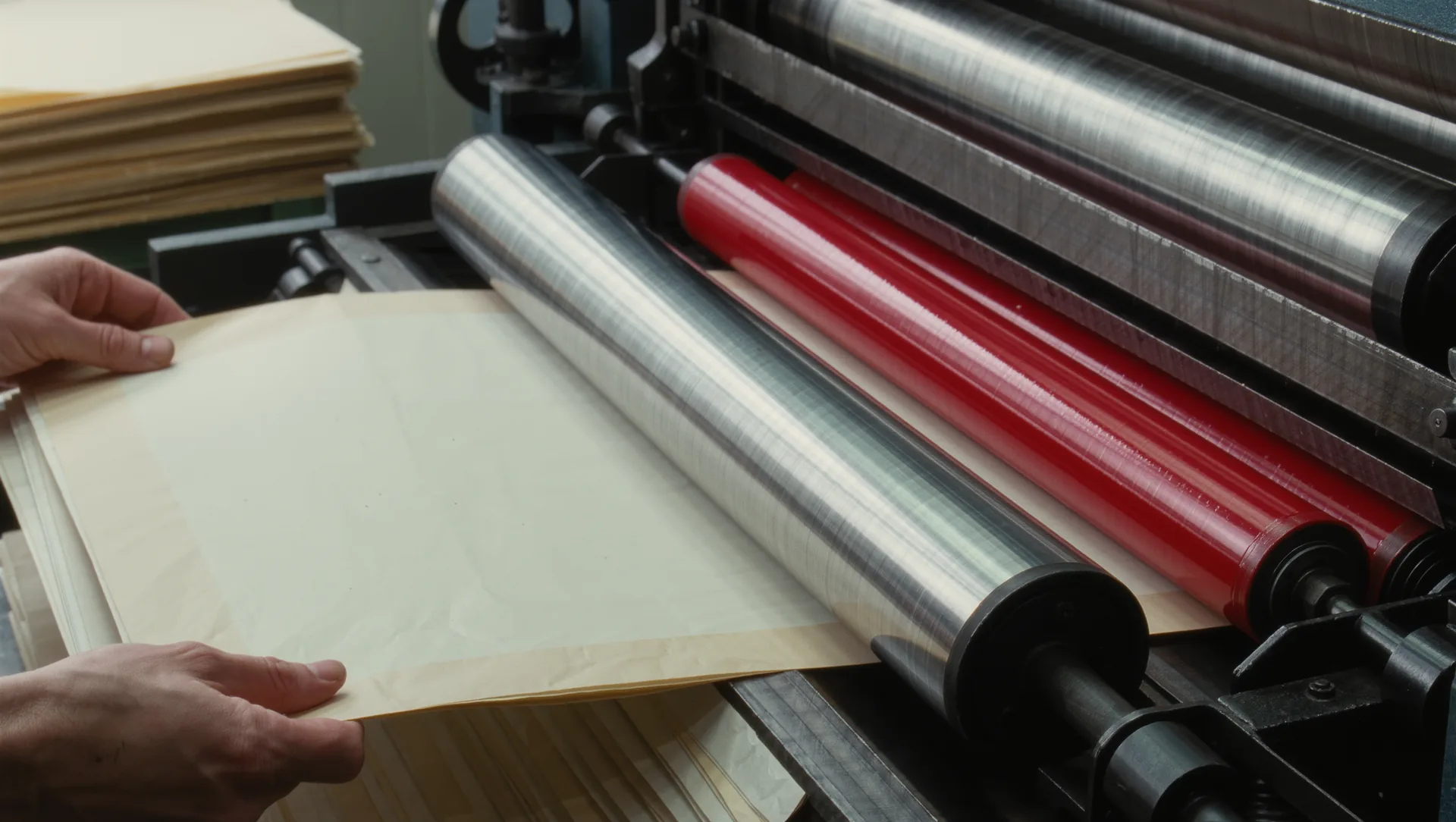
Most print problems are file problems, and the same six recur.
Any image or colour reaching the edge of the finished piece must extend 3 mm beyond the trim line. Cutting has a tolerance, and without bleed some copies will show a white sliver.
Equally, keep text at least 4 mm inside the trim line. Text placed close to the edge will be cut on some copies of the run.
Print uses four process inks; screens use three light primaries. Files supplied in the screen colour space are converted by the printer, and the conversion changes the appearance.
| Colour | Screen | |
|---|---|---|
| Vivid blue and violet | bright | noticeably duller |
| Strong orange and green | bright | duller |
| Deep black on large areas | solid | grey unless built correctly |
| Specific brand colours | exact | needs a spot ink to match |
Convert deliberately rather than letting the printer do it, and where a brand colour must be exact, specify a spot ink and accept the cost.
300 dpi at final printed size for photographs, 1,200 dpi for line art. An image that looks acceptable on screen at 72 dpi will be visibly soft in print.
The common error is enlarging a web image. A 600-pixel-wide photograph cannot be printed at 100 mm width acceptably.
Embed them or convert text to outlines. A file referencing a font the printer does not have will be substituted silently, and the first anyone knows is when the proof arrives with different type.
Conversion to outlines removes the risk entirely and prevents last-minute text edits, which is usually an acceptable trade.
Text printed in a single black ink looks grey on large areas. Large black areas need a build of several inks; small text should stay single black to avoid registration problems producing coloured fringes.
Getting this backwards is one of the most visible amateur signals in print.
Supply a print-ready PDF at the specification the printer states, with the correct standard, bleed included and marks as requested.
Then request a proof. A digital proof catches content errors; a physical proof catches colour. For any run above a few hundred copies, or any colour-critical job, the physical proof is worth the cost and the day.
Bleed present, safety margin respected, colour space converted, images at 300 dpi at final size, fonts embedded or outlined, blacks built correctly, and one final read of the copy by somebody who has not seen it before.
Three millimetres of image extending beyond the trim line, so that cutting tolerance does not produce a white edge. Without it, trimming will show.
Screens emit light and mix differently from ink on paper. Some screen colours cannot be reproduced in print at all.
More from Print & Out-of-Home
Print & Out-of-Home
Circulation has fallen and cost per contact has risen. What has also risen is the attention a printed page receives, and that changes the sum.
Print & Out-of-Home
The rate card is a starting point, the position matters more than the size, and the readership figure is not the number you should plan with.
Print & Out-of-Home
Small circulations, high cost per thousand, and almost no waste. For business-to-business advertisers this is frequently the most efficient channel available.