
Strategy & Craft
Splitting an ad budget: the 70-20-10 rule
Seventy per cent on what works, twenty on scaling, ten on experiments. The rule is old, simple, and violated in almost every account.
2 min readMay 9, 2026
Strategy & Craft
Most brand guides are a PDF nobody opens. A working one is four pages and a folder of ready files.

The typical brand guide is forty pages, produced at launch, and opened twice. Meanwhile the material drifts, because whoever needs a document at four o'clock uses whatever is to hand.
They are written as rules and used as obstacles. Somebody needs a flyer, cannot find the right logo file, and rebuilds it from a website screenshot. The guide did not prevent this because it contained rules rather than files.
Page 1: logo. The versions that exist, when each is used, minimum size, clear space, and three examples of what is forbidden, illustrated rather than described.
Page 2: colour and type. Exact values for print and screen, the typefaces with their weights, and the fallback for systems where the typeface is unavailable.
Page 3: images and tone. Six example images that are right and three that are wrong. The tone pairs and the banned phrase list.
Page 4: applications. One example each of business card, letter, advertisement, social post and vehicle. Actual examples, not descriptions.
The guide is the smaller half. The larger half is a folder everyone can reach containing:
Templates are what create consistency. Rules only describe it.
Without one person responsible, a guide degrades predictably: a new colour appears for one campaign, an agency adjusts the logo slightly, a template gets edited and saved over.
The owner does two things: approves exceptions, and reviews the published material once a quarter against the guide. Half a day, four times a year.
A guide that cannot change gets ignored the first time reality contradicts it. Date it, version it, and record what changed.
Realistic exceptions belong in the guide rather than outside it. If the logo genuinely does not work on the vehicle in its standard form, document the vehicle version rather than pretending it does not exist.
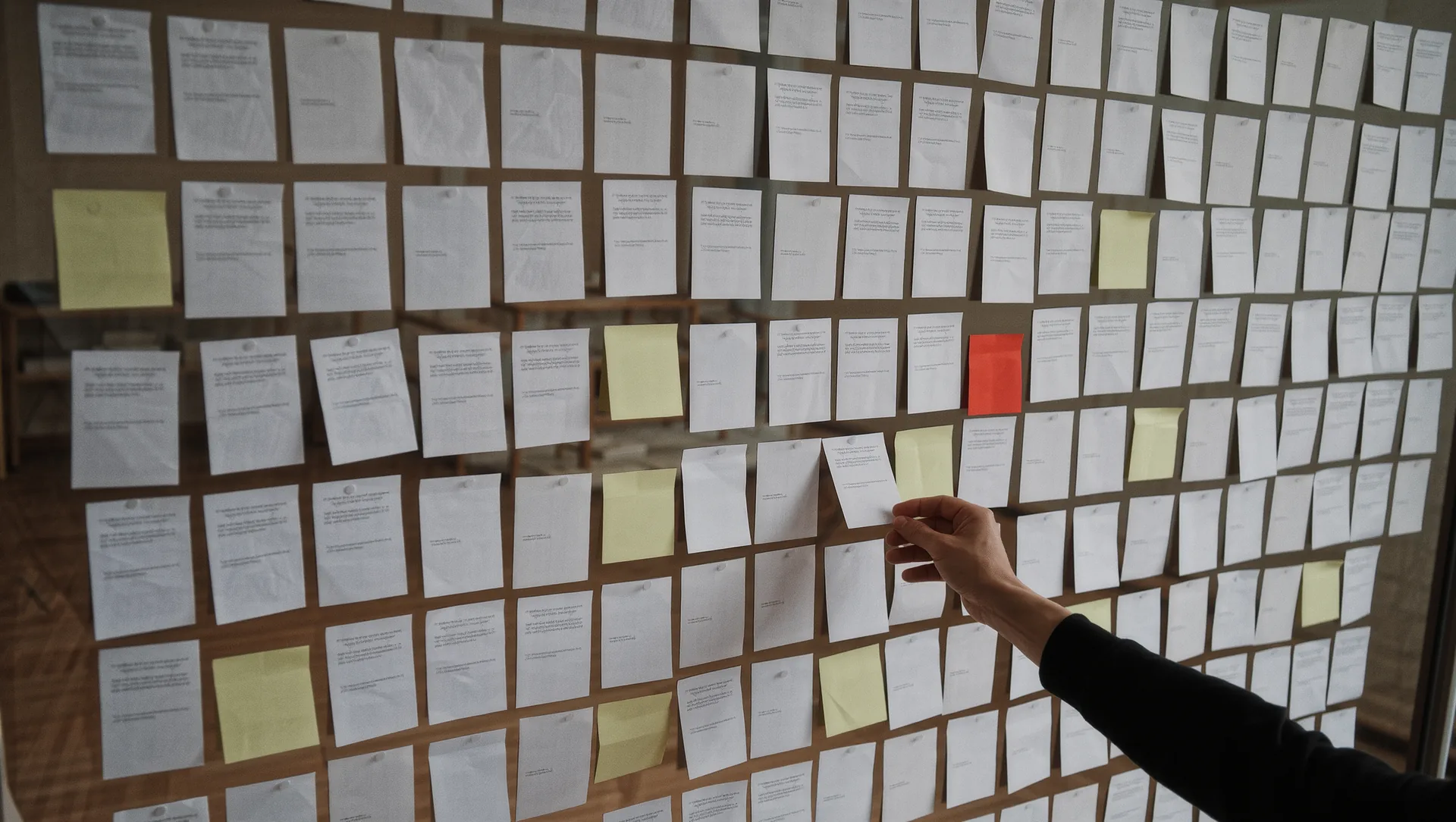
Collect everything published in the last twelve months: adverts, letters, social posts, the website, the van. Lay it out on a table.
The inconsistencies are visible in thirty seconds, and that table is a better argument for the guide than any document.
Yes, but a short one. Even a two-person firm produces inconsistent material once a third party touches it.
Assembled from existing material, a day. Designed from scratch, several thousand.
More from Strategy & Craft
Strategy & Craft
Seventy per cent on what works, twenty on scaling, ten on experiments. The rule is old, simple, and violated in almost every account.
Strategy & Craft
Percentage-of-revenue rules are widely quoted and mostly wrong. The answer comes from your own numbers in four steps.
Strategy & Craft
A bad brief produces bad work at full price, and the client pays twice. Eight questions, two pages, three hours of your time.