
Print & Out-of-Home
Print advertising is not dead, just pricier
Circulation has fallen and cost per contact has risen. What has also risen is the attention a printed page receives, and that changes the sum.
2 min readNov 2, 2025
Print & Out-of-Home
Response rates between 0.1 and 2 per cent, and the difference between those two figures is almost entirely the offer.
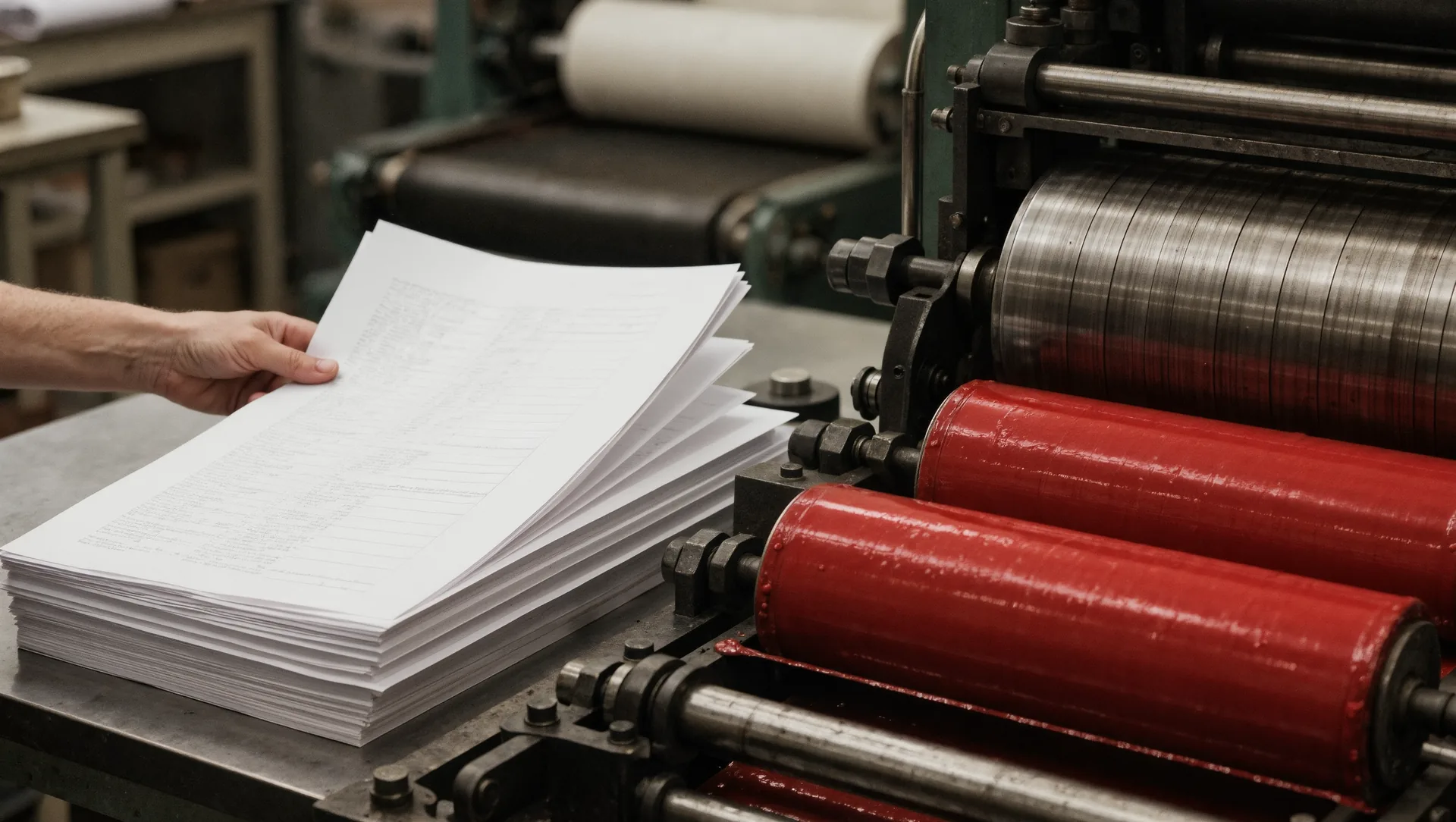
Leaflet distribution is cheap, widely dismissed, and works when three things are right: the area, the offer and the timing.
A leaflet saying who you are and what you do produces almost nothing. A leaflet with a specific, time-limited, locally relevant offer produces a measurable response.
| Offer type | Typical response |
|---|---|
| Business description only | 0.05 to 0.15 % |
| General discount | 0.2 to 0.5 % |
| Specific service at a stated price | 0.5 to 1 % |
| Free relevant inspection or check | 1 to 2 % |
| Neighbour-specific reference | 1 to 3 % |
The last row is the strongest and the least used. "We have just replaced the roof at number 14. If you would like the same survey, call us" is local, credible and specific.
The instinct is to print more and cover more ground. The better approach is a tight area covered repeatedly.
Reasons: recognition builds with repetition, local reference points work only nearby, and the response rate in a district where you already have customers is several times higher than in one where you have none.
Distribution timing has a measurable effect. Thursday and Friday deliveries perform better for weekend decisions. Avoid the days when the free papers and supermarket leaflets arrive, since yours will be in a stack of twenty.
For trades, distribute after visible work in the street, while the neighbours have seen it.
The decision to keep or bin is made in about two seconds while walking from the door.
That means: the offer legible at arm's length, the business type identifiable instantly, one image not five, and a reason to keep it, such as a discount code or useful information on the reverse.
The reverse is usually wasted. A useful reference, such as emergency numbers, a seasonal checklist or a small calendar, gets the leaflet kept on a noticeboard rather than binned.
Distribution to households marked as refusing unaddressed material is prohibited in many jurisdictions and generates complaints where it is not.
Also check local rules on distribution to letterboxes, on placing material on vehicles, which is frequently prohibited, and on distribution in public places, which may require permission.
A code, a dedicated number, a specific landing address, or simply a note to ask every caller. Without one of those, the whole exercise is unmeasurable and will be repeated or abandoned on the basis of nothing.
0.1 to 0.5 per cent for general awareness, 1 to 2 per cent for a strong local offer with a deadline.
Fewer, in a tighter area, more often. Three rounds of 2,000 in the same district beats one round of 6,000 spread wide.
More from Print & Out-of-Home
Print & Out-of-Home
Circulation has fallen and cost per contact has risen. What has also risen is the attention a printed page receives, and that changes the sum.

Print & Out-of-Home
The rate card is a starting point, the position matters more than the size, and the readership figure is not the number you should plan with.

Print & Out-of-Home
Small circulations, high cost per thousand, and almost no waste. For business-to-business advertisers this is frequently the most efficient channel available.