Print & Out-of-Home
Print advertising is not dead, just pricier
Circulation has fallen and cost per contact has risen. What has also risen is the attention a printed page receives, and that changes the sum.
2 min readNov 2, 2025
Print & Out-of-Home
The physical qualities of a printed piece communicate before anything printed on it is read. Four decisions carry almost all of that effect.
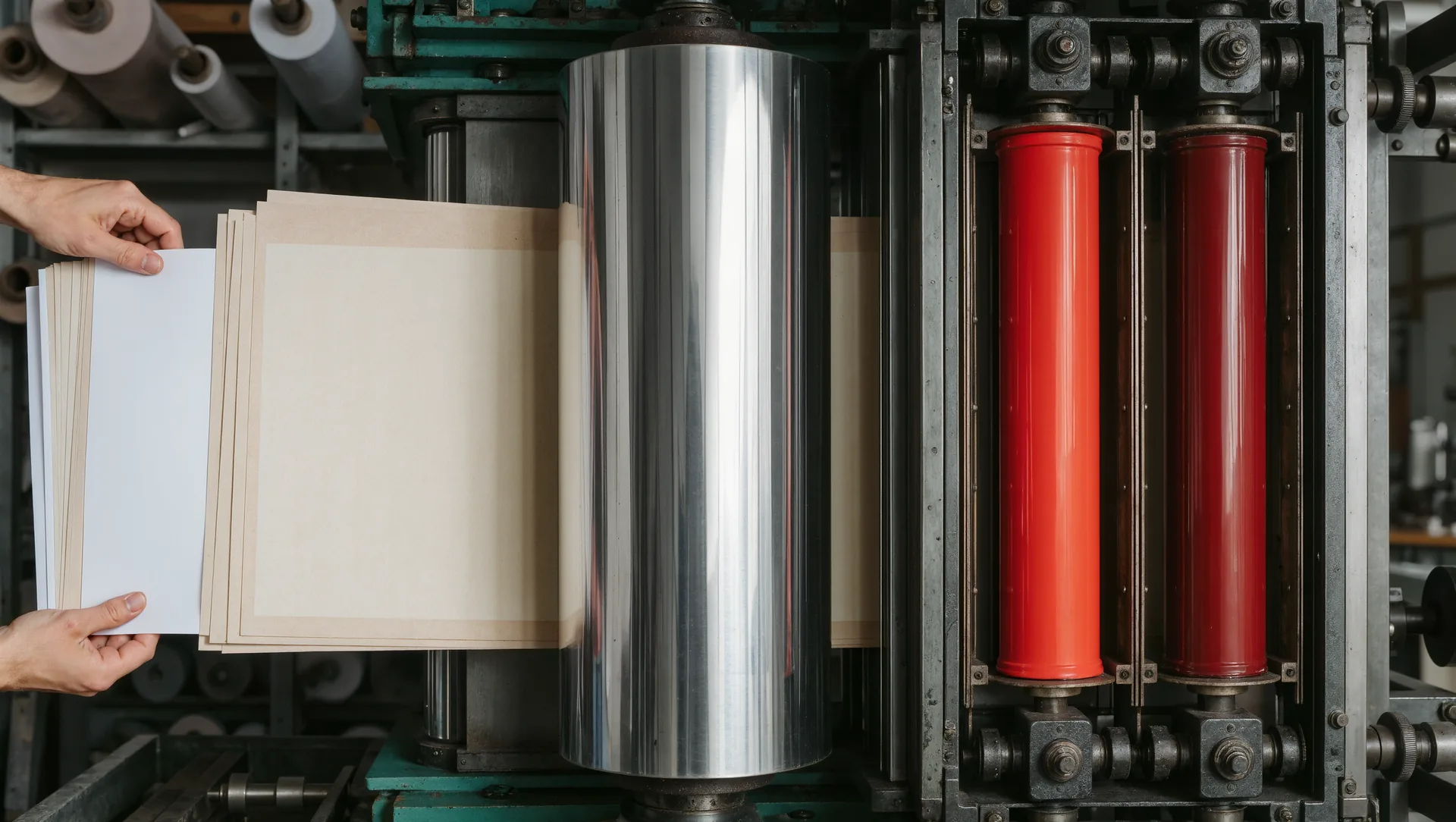
A printed piece is a physical object, and people assess objects by handling them before reading them.
The most direct signal. Weight is measured in grams per square metre and the perceptual thresholds are fairly consistent.
| Weight | Reads as | Typical use |
|---|---|---|
| 80 to 100 gsm | disposable | letterhead, inserts |
| 115 to 135 gsm | ordinary | leaflets, newsletters |
| 170 to 200 gsm | substantial | quality flyers, covers |
| 250 to 300 gsm | considered | postcards, folders |
| 350 gsm and above | premium | business cards, invitations |
Doubling the weight of a leaflet typically adds a modest amount to the total cost and changes the perceived value considerably.
Coated stock has a sealed surface. Photographs reproduce sharply, colours are vivid, and the surface can be gloss, silk or matt.
Uncoated stock absorbs ink. Images are softer, colours are muted, and the surface feels natural and takes handwriting.
The choice is a positioning decision. Technical and photographic material wants coated; craft, professional services and anything meant to feel considered often reads better uncoated.
Options 1 and 4 together produce a disproportionate effect for a small addition to cost.
Laminated stock cannot be written on, which matters for cards people annotate. Very heavy stock cannot be folded without creasing unless it is scored. Uncoated stock shows fingerprints less but marks more easily.
Recycled and certified papers are increasingly expected by business customers and the quality difference against virgin stock has largely disappeared.
Every printer holds sample books and will send a set. Ordering an unprinted sample of the exact stock before committing to a run costs nothing and prevents the most expensive kind of disappointment.
For anything above a few hundred copies, request a printed proof on the actual stock rather than a digital approximation.
135 to 170 gsm for a leaflet, 300 gsm and above for anything meant to be kept. Below 115 gsm reads as disposable.
Matt lamination on a card or cover typically adds a small percentage to the total and changes the object's feel entirely.
More from Print & Out-of-Home
Print & Out-of-Home
Circulation has fallen and cost per contact has risen. What has also risen is the attention a printed page receives, and that changes the sum.
Print & Out-of-Home
The rate card is a starting point, the position matters more than the size, and the readership figure is not the number you should plan with.
Print & Out-of-Home
Small circulations, high cost per thousand, and almost no waste. For business-to-business advertisers this is frequently the most efficient channel available.