
Print & Out-of-Home
Print advertising is not dead, just pricier
Circulation has fallen and cost per contact has risen. What has also risen is the attention a printed page receives, and that changes the sum.
2 min readNov 2, 2025
Print & Out-of-Home
Six words, one image, and two seconds of attention. Outdoor is the most disciplined medium there is, and the discipline is where most campaigns fail.
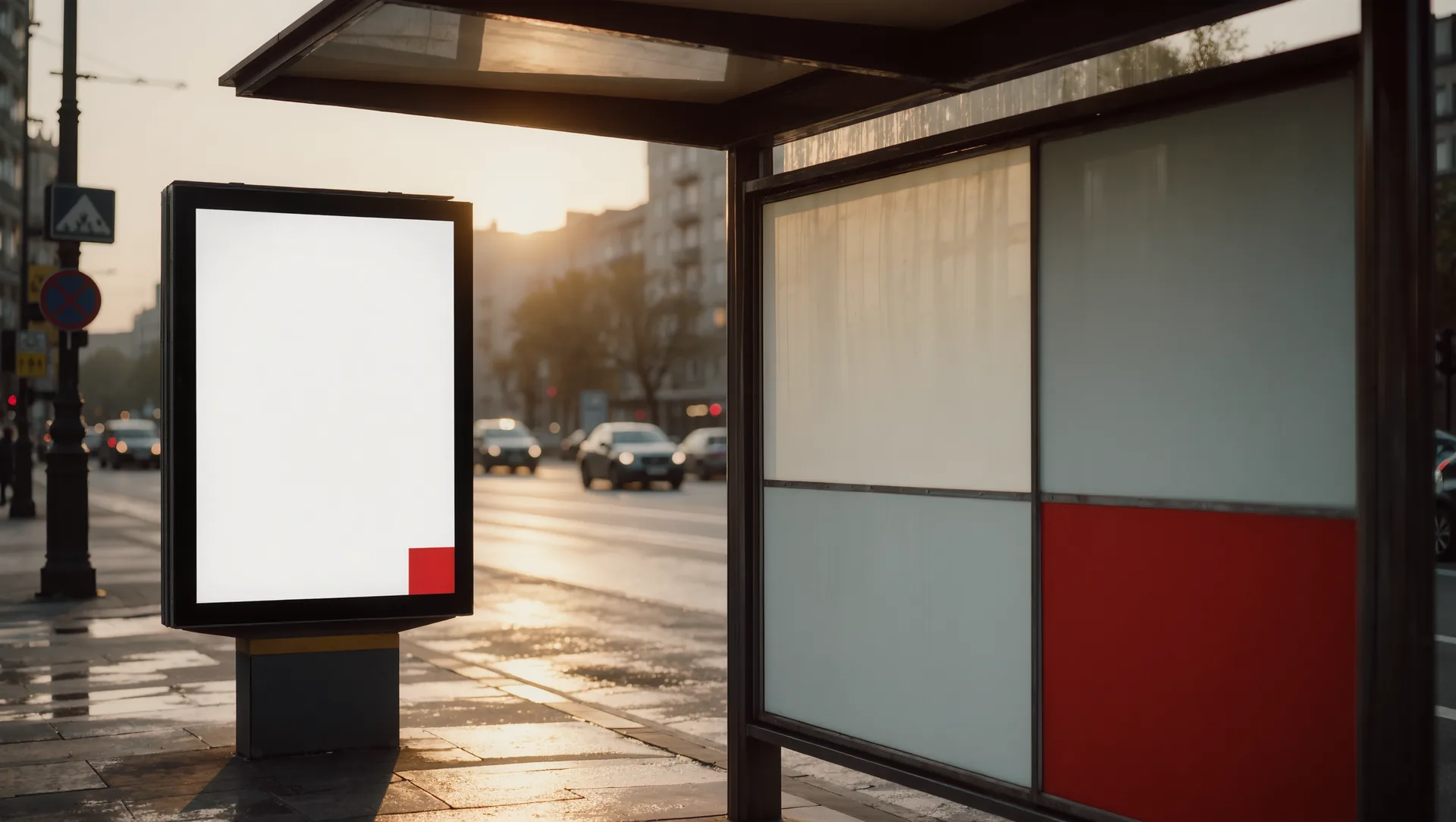
Outdoor advertising is seen at speed, in passing, by someone doing something else. Every rule in the medium follows from that.
A roadside poster is read in one to three seconds. That allows a headline of about six words, a logo, and one image.
Anything more is not read. Telephone numbers, web addresses, lists of services and body text are wasted on a poster passed at 50 kilometres per hour.
| Format | Size | Typical use |
|---|---|---|
| Large-format billboard | 18 sqm and above | brand, high impact |
| Standard poster | 8 to 9 sqm | the workhorse |
| Pedestrian panel | 1.5 to 2 sqm | urban, closer reading |
| Transport shelter | 1.7 sqm | dwell time, more words possible |
| Digital screen | varies | rotating, flexible |
| Column and pillar | varies | urban, traditional |
Formats with dwell time, so shelters, stations and pedestrian areas, permit more text because the viewer is waiting rather than passing.
Two sites at the same rate can differ enormously in value. Before booking, look at the actual location or ask for a photograph.
What to check: the approach distance and whether the site is visible for more than a moment; whether it faces the traffic flow or is seen at an angle; competing posters immediately adjacent; obstruction by trees, signs or parked vehicles; and lighting, since an unlit site is invisible for a large part of the year in winter.
Site lists sold as packages frequently include several poor locations to make up numbers. Ask which specific sites you are getting and inspect the ones you can.
Text height should be roughly proportional to viewing distance. A rough guide: 25 mm of letter height per 10 metres of viewing distance.
High contrast is essential. Subtle colour relationships that work on screen disappear at distance and in poor light. Test by viewing the artwork as a thumbnail on a phone from arm's length; if it fails there, it will fail on the road.
It builds recognition through repetition among people who pass the same site daily. That makes it excellent for brand presence in a defined area and poor for direct response.
Measuring it by enquiries attributed to a poster will always disappoint. Measure by recognition, by name search volume, and by regional holdout.
Rates are negotiable, particularly for late availability and longer periods. Ask what is unsold for the coming cycle.
Production is separate from site rental and is usually a modest addition. Confirm who prints, posts and removes, and what happens if a poster is damaged.
Two weeks minimum, four is standard. A single week rarely accumulates enough exposures to register.
Depending on format and location, £150 to £900 per site for a two-week period in regional markets.
More from Print & Out-of-Home
Print & Out-of-Home
Circulation has fallen and cost per contact has risen. What has also risen is the attention a printed page receives, and that changes the sum.

Print & Out-of-Home
The rate card is a starting point, the position matters more than the size, and the readership figure is not the number you should plan with.

Print & Out-of-Home
Small circulations, high cost per thousand, and almost no waste. For business-to-business advertisers this is frequently the most efficient channel available.