
Industries
Advertising for trade businesses
Most trade firms have too much work and too few staff. That inverts the entire advertising brief, and almost nobody adjusts for it.
2 min readMar 6, 2026
Industries
Bespoke joinery competes with flat-pack on price and cannot win. It competes on fit, material and permanence and wins easily, if it says so.

A fitted wardrobe from a factory costs £2,400. The same wardrobe from a joiner costs £6,800. Advertising that does not address that gap directly will lose every time.
Fit. Mass-produced furniture assumes square rooms and standard heights. Old buildings, sloping ceilings and awkward corners are exactly where bespoke wins, and that is a visible, demonstrable argument.
Material. Solid timber against coated board is a difference customers can see and touch. Show it. A physical sample in the first meeting closes more work than any brochure.
Lifespan. A factory unit lasts perhaps twelve years, a well-made one fifty. Expressed as cost per year, the bespoke option is frequently cheaper, and almost nobody makes that calculation for the customer.
The workshop is a marketing asset. Video of timber being selected, jointed and finished performs unusually well, because it makes visible the thing the price is for.
Short clips shot on a phone are sufficient and often better than produced film, because they look like what they are.
| Specialism | Market | Competition |
|---|---|---|
| Fitted furniture for old buildings | strong, local | low |
| Staircases | regional | low |
| Shop and practice fitting | commercial | medium |
| Windows and doors in timber | conservation work | low |
| Kitchens | crowded | high |
| General joinery | undefined | high |
The last row is where most firms position themselves and where enquiries are hardest to win. A firm known for staircases gets staircase enquiries from a wide radius; a firm known for general joinery competes with everyone within five kilometres.
Shop fitting, practice fitting and hospitality work are steadier than domestic and mostly won through architects, interior designers and general contractors.
That is relationship work: a portfolio in a physical folder, visits to three or four practices a quarter, and reliability on dates. Advertising plays almost no part.
Joinery photographs badly on a phone. Interiors are dim, timber colour shifts under artificial light, and the detail that justifies the price disappears.
This is the one trade where professional photography of the finished work repays itself quickly. A half-day covering five completed projects produces material that sells work for years.
With cost per year of use and with the fit that mass production cannot deliver. Both are arguments the customer can check.
Only if it is on a route people already take. Otherwise photographs and a workshop visit do the same job.
More from Industries
Industries
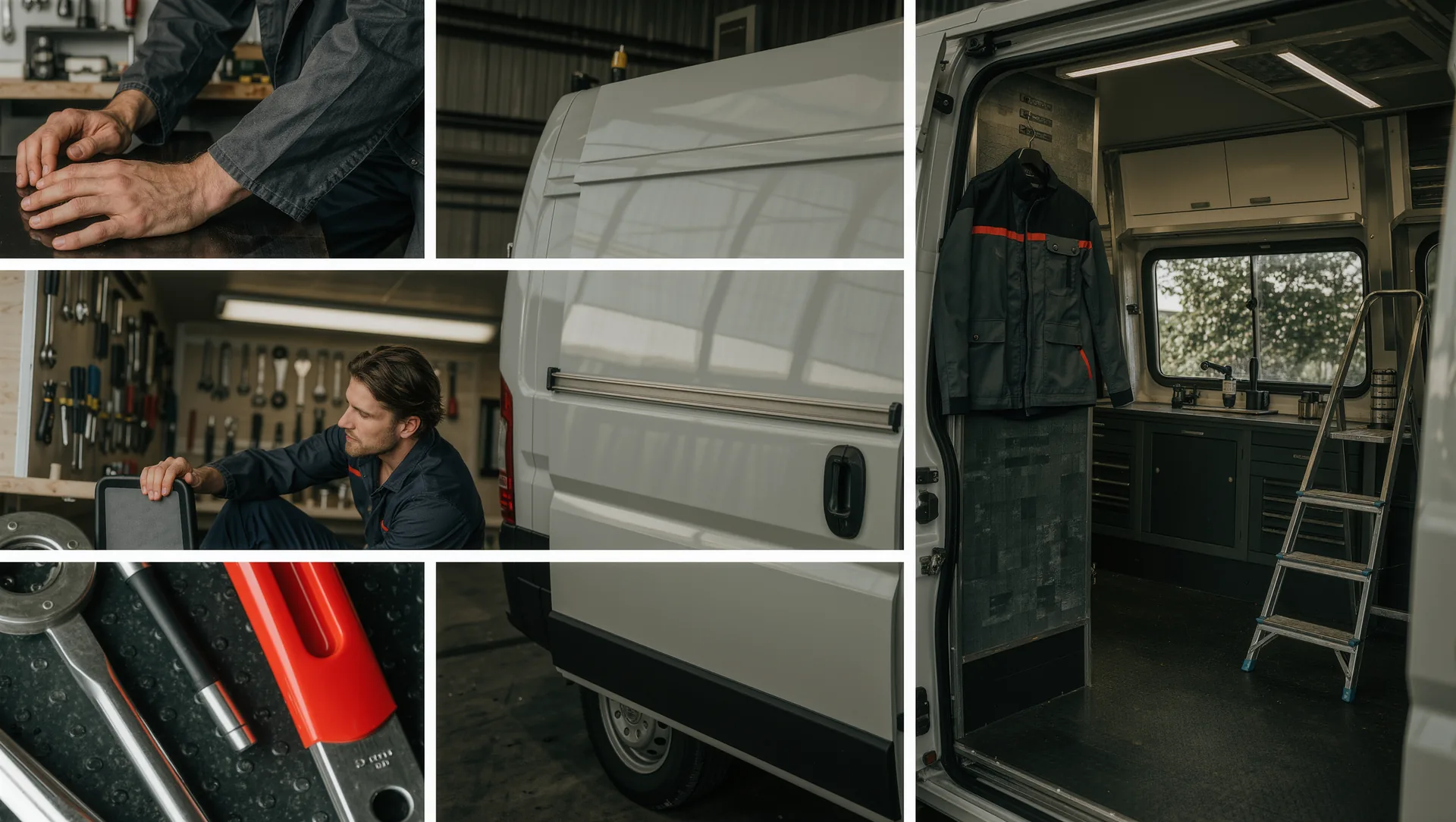
Most trade firms have too much work and too few staff. That inverts the entire advertising brief, and almost nobody adjusts for it.

Industries
Roofing demand is weather-driven, seasonal, and half of it is an emergency. Three different campaigns, not one.
Industries
Small callouts pay poorly and fill the diary. Advertising should be aimed at the three job types that actually carry the business.